Understanding Roulette Odds: How to Make Smarter Bets

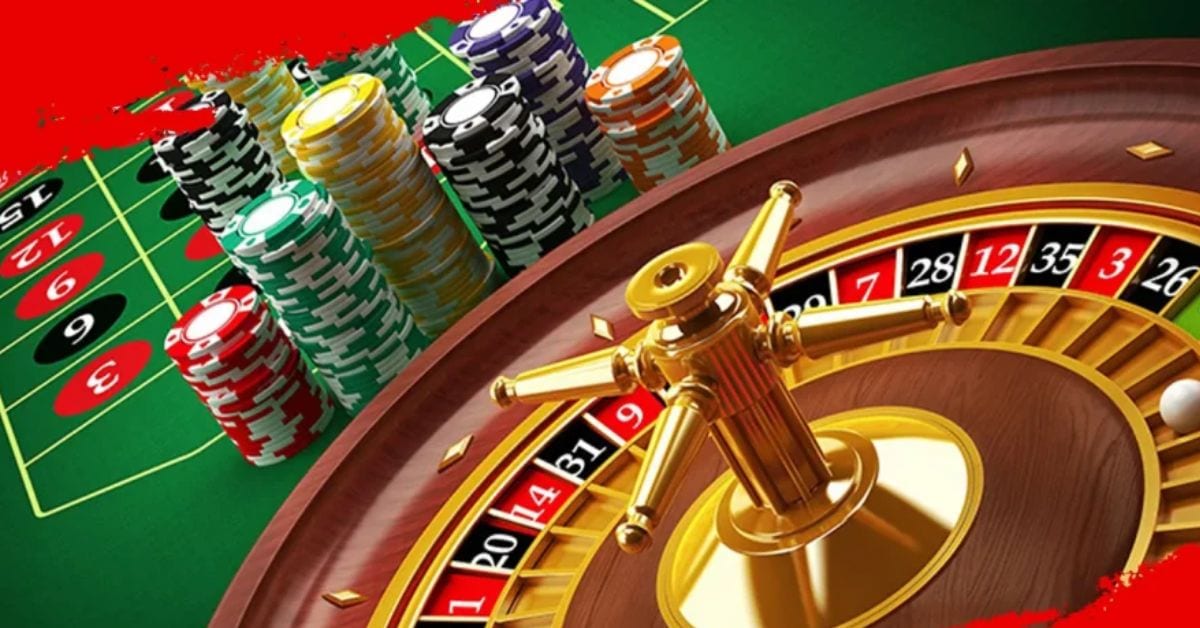
Roulette is one of those games that even people who don’t gamble can recognize. The wheel spinning, the ball hopping around, the moment when everyone stares, waiting to see where it lands—that atmosphere is hard to miss. But underneath all that, roulette is just math. The numbers are simple to figure out. If you bother to learn them, you at least know what you’re getting into when you put money down. Otherwise, you’re just guessing.
The Two Main Types of Roulette
The first thing to understand is that European and American roulette offer different odds. European roulette has one zero (37 sectors). American roulette has two zeros—0 and 00 (38 sectors). Because of the extra sector, the house edge changes significantly. In European roulette, it’s 2.7%. In American roulette, it’s 5.26%. The difference is almost double. If you have to choose, it’s always better to play European roulette. Tables with three zeros (000) have recently appeared. There, the house edge increases to 7.69%. This is pure rip-off, and it’s best to avoid such tables.
What Are the Different Types of Roulette Bets and How Are They Calculated?
All bets in roulette are divided into two types: inside and outside. Inside bets are bets on specific numbers or small groups. The most popular is a bet on a single number (straight-up). In European roulette, the odds of winning are 1 in 37, with a payout of 35 to 1.
Why do they pay 35 instead of 37? This is the house edge. If you do the math, statistically, out of 37 spins, you win one and lose 36. Bet one chip on 37 spins, and you’ll lose 37. Win once, and you’ll receive 36 chips (35 chips of winnings plus your bet back). So, minus one chip on 37, which gives you a 2.7% advantage.
Other inside bets:
- Split (two adjacent numbers)—payout 17 to 1;
- Street (three numbers in a row)—payout 11 to 1;
- Corner (four numbers)—payout 8 to 1;
- Line (six numbers)—payout 5 to 1.
Outside bets—on groups of numbers. The odds of winning are higher, but the payouts are lower. Bets on dozens (1-12, 13-24, 25-36) and columns pay 2 to 1. The odds of winning are 12 out of 37 (32.4%). The most popular are even-money bets: red/black, even/odd, 1-18/19-36. The payout is 1 to 1, the odds of winning are 18 out of 37 (48.65%).
The Worst Bet in Roulette
There’s a bet in American roulette that’s best avoided: the five-number basket bet on 0, 00, 1, 2, 3. It pays 6 to 1, but the house edge is a whopping 7.89%. This is the only bet where the math is even worse than anywhere else.
Betting Strategies and Mathematics in Roulette
Many people use systems like Martingale, doubling their bet after a loss. Such systems can yield short-term wins, but they don’t change the math. Each spin is independent; the ball doesn’t remember past results. If black lands ten times in a row, the chance of red landing on the next spin is still 48.65%.
Professor Leighton Vaughan-Williams of the University of Nottingham offers an interesting calculation. If you need to win a certain amount, it’s better to bet everything on one spin than to split your bets. For example, if you need to win $216 out of $108, betting on red has a 48.6% chance of winning. If you divide that by 18 $6 bets on numbers, the chance drops to 39%.
Tips for Successful Roulette Play
Here are some roulette rules to help you successfully wager:
- Choose European roulette—the house edge is almost half there.
- Don’t play American roulette with five numbers.
- Even-money bets offer the highest chance of winning on a given spin, although the payouts are small.
- Think of roulette as entertainment, not a way to make money.
Before playing for real money in roulette, you can practice with free simulators. There, you can easily learn the best types and understand the mechanics. You can play free roulette directly in your browser without registration/money. This is a great way to start playing without risking your wallet.
Conclusion
Roulette is a game of chance, and the casino always wins in the long run. You can’t cheat mathematics. European roulette offers better odds than American roulette. A five-sided bet in the American version is downright unprofitable. Systems like the Martingale don’t work because each spin is independent. The best thing to do is decide how much you’re willing to spend and stick to it. Gambling should be fun, not a way to make money. If you treat it that way, losing won’t hurt, and winning is a nice bonus.